Sunday, 4 September 2022

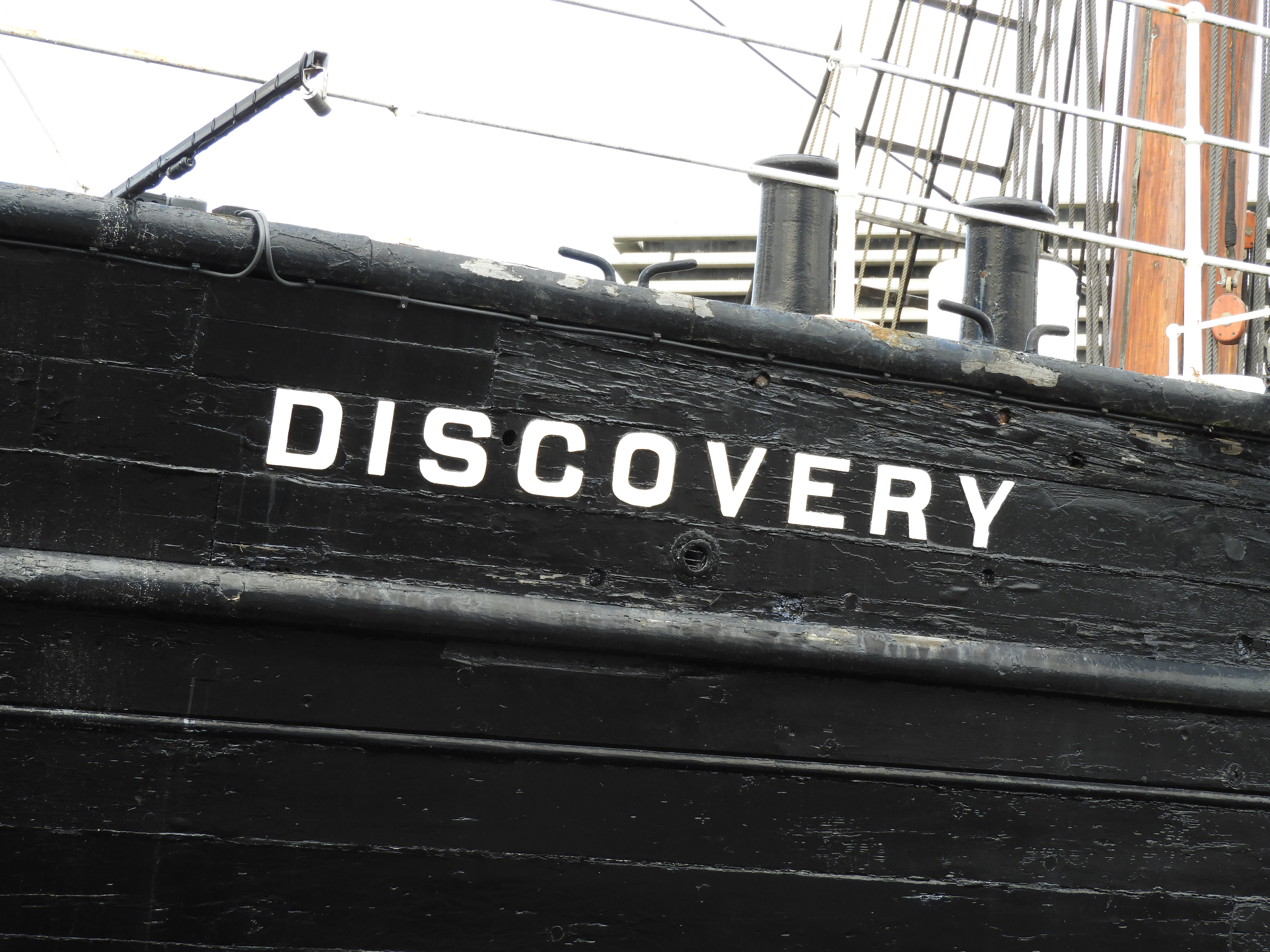
RRS Discovery

The Discovery was a rigged steamship purpose built for Antarctic surveys and was the last traditional three masted ship built in  the UK. Building was undertaken in Dundee and the ship launched in 1901. On her first mission she carried Robert Scott and Ernest Shackleton to the Antarctic.  During this expedition the Discovery got stuck on an ice shelf and was frozen in for two years and was at the point of being abandoned when help and a shift in the ice shelf allowed her to break free.

After returning to the UK Discovery was sold to the Hudson Bay Company in 1905 and entered service as a cargo ship for the next 7 years. After a lay up further cargo work continued, including carrying munitions in WWI and the assisting the white Russians in the Russian civil war. Becoming outdated Discovery was then laid up before, in 1922, becoming home to the Stepney Sea Scouts.

The end was not yet in sight as the following year the Hudson Bay Company sold Discovery to the British Colonial Office and in 1924 she underwent a major refit at Vosper and Co before heading to the Southern Ocean investigating whale populations. Further expeditions were carried in conjunction with Australia and New Zealand before Discovery returned to London in 1931. The ship then sat idle for 5 years until being handed to the Sea Scouts as a training ship.

In WWII Discovery was a depot ship for the River Emergency Services, a network of First Aid Stations. Unfortunately, during the war her boilers and engines were removed and sold.

In the 50's the ship was returned to the Admiralty as a drill and training ship for the Volunteer reserve and Cadets until eventually passing to the Maritime Trust in 1979 which saved her from being scrapped as there had been plans to use her for target practice until a public outcry. After a period as a public museum Discovery was transferred to the Dundee Heritage Trust and returned to the place of her birth for the first time since the original launch.

Placed in a custom-built dock in 1992, Discovery is now the centrepiece of Dundee's visitor attraction Discovery Point, displayed in a configuration as near as possible to her 1923 state, when she was refitted in the Vosper yard. We visited a week or so ago and found the ship, its history and displays a fascinating experience. Here are a few pictures from the day.

Thursday, 25 August 2022

Crathes Castle

Now belonging to the National Trust the land on which Crathes Castle sits was previously owned by the Burnetts of Ley family and was gifted to them back in 1323 by King Robert the Bruce. Although some timber fortresses were then built it was not until 1553 that the current castle was commenced but it was 1595 before it was completed. an additional wing was added in the 18th century.

The castle was decorated with a lot of wood panelling and painted ceilings and much of it still survives and it is fitted out with antique furniture and other period pieces reflecting its ownership prior to it being handed to the National Trust in 1951. There is also a superbly maintained garden.

We went a couple of days ago and really enjoyed our visit and this is some of what we saw:


Monday, 22 August 2022

Fort George

Fort George, a little north east of Inverness, Scotland, is built on a promontory jutting in to the Moray Firth. It protects the approach to Inverness and was started in 1748 to control the Scottish Highlands following the Jacobite rebellion of 1745. It replaced a previous Fort George within Inverness itself.

Building work took nearly 25 years to complete and, at a cost of £200,000, came in at more than double the budget (some things never change!). The external walls are extremely thick, covered with soil and turf and protect casement rooms designed to keep occupants safe in the event of attack although an actual attack has never taken place. Numerous gun emplacements cover the approaches and help protect the barracks buildings inside as does a drawbridge approach from land.

The fort was used for training for the D-Day landings in WWII and is still a military garrison being home to the Black Watch although closure is scheduled for 10 year's time. However, despite the military presence the fort is open to the general public with access to many areas some of which are set out as they would have been over a century ago and it is certainly worth a visit.


Thursday, 4 August 2022

Kentish Belle

The better half alerted me to this steam hauled train passing through today and, fortunately, its timing meant that it came through just after I finished work so I was able to stop for a quick video.


Wednesday, 22 June 2022

End of the line?

The steam tug Cervia is currently part of the Ramsgate Maritime Museum collection. She was built in 1946 and is the last sea going steam tug in UK waters and the last to work commercially, being in operation until 1983.

However, despite restoration works a few years ago the tug is in poor shape below the waterline and resources are not available for the repairs required. Lottery bids have been drawn up but as the Council cannot match the funding bid nor give a long term commitment it is now likely that the tug will be broken down and parts sold off.

The only hope is that someone will be able to purchase the tug, apparently for a nominal sum, and offer it a new home. However, if this does not happen by mid September it seems the tug will die.